Britain’s Growth Is Sitting in a Queue Behind a Substation
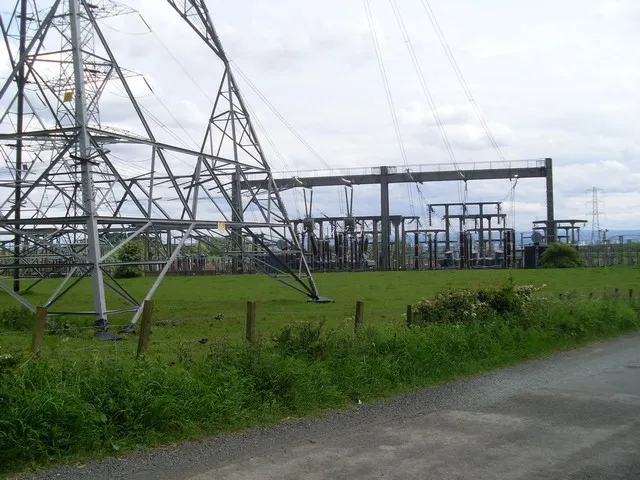
Photo: Stephen Sweeney, CC BY-SA 2.0, via Wikimedia Commons
Britain has a queue problem. Not the one for passports, or the one for a GP appointment, or the one for a table at the only restaurant in town that has been written up by a national newspaper. This is the queue for electricity. Specifically, the queue to connect new power projects to the grid. It is long, it is slow, and it is one of the most consequential pieces of industrial policy in the country — except hardly anyone in Westminster talks about it like that.
The growth pitch is familiar. Data centres, battery storage, offshore wind, hydrogen, electrified heat, the lot. All of it needs a connection. Yet developers can spend years waiting for a date, a capacity offer, or a straight answer. The queue contains hundreds of gigawatts of projects, many of them speculative. The result is a waiting list where serious projects can be stuck behind applications that may never turn into a spade in the ground. That is not a technical glitch. It is a governance failure with a plug on it.
The queue is the policy
A grid connection queue sounds like plumbing. It is not. If you control the order in which projects connect, you control which regions get investment, which technologies scale, and which incumbents face competition. You also control the pace of the government's own growth story. A minister can announce a strategy for clean power, digital infrastructure or advanced manufacturing, but if the plug is not available, the strategy is a PDF with ambitions.
The current system has been described as first-come, first-served. In practice, it can feel like first-to-speculate, first-to-sit-there. Developers are encouraged to join the queue early to hold a place, even if their project is years away from planning consent or financing. Everyone rationally games the system, and the system rewards them for it. The queue gets longer, the wait gets longer, and the case for reform gets stronger — without anyone having to make a difficult decision about who goes first.
Who benefits from a slow queue?
Plenty of people, though few would put it on a conference panel. Incumbent generators with existing connections face less competition from new entrants. Landowners and developers with early queue positions hold an option that becomes more valuable the more congested the queue becomes. Consultants, lawyers and connection specialists get paid to navigate a process that resembles a medieval land dispute with more spreadsheets. And ministers get the best of both worlds: they can announce a plan, blame the queue, and avoid saying which projects they actually want to prioritise.
There is also a quieter institutional incentive. Delays are easy to describe as a capacity problem, and capacity problems can be solved with more processes, more studies and more consultations. Those are all announceable. A hard choice about culling dead projects, demanding deposits or prioritising strategic sites is less announceable, because it involves telling someone no. Whitehall is much better at publishing a roadmap than it is at taking a decision.
What other countries do differently
The UK is not the only country with a queue, but it is not compulsory to manage one badly. In the United States, regulators have pushed reforms that group projects into clusters, require financial deposits and readiness milestones, and penalise withdrawals. The principle is simple: do not let speculative applications block projects that are ready to build. In parts of Europe, connection offers are increasingly tied to permits, land rights and financial commitments. Some systems publish much more data about who is in the queue and how likely they are to deliver. None of this is exotic. It is queue management with consequences.
The UK has started to move. Ofgem and the National Energy System Operator have been working on connections reform, and there is broad agreement that the queue needs to be sorted out. But reform is not the same as resolution. A new process can still leave the same fundamental question unanswered: who gets to connect, in what order, and on what conditions? That is not an accounting problem. It is a political one.
An accounting problem dressed up as a strategy
Ministers like to talk about capacity, headroom and delivery. They like strategies, roadmaps and missions. What they do not like is the messy business of picking winners, sequencing projects and telling developers that their place in the queue is not a moral entitlement. Yet that is exactly what a functioning grid connection regime requires.
The fix is not a single lever. It means requiring deposits and proof of progress. It means removing projects that are not viable, not just adding more staff to process them. It means publishing data so the queue is transparent. It means aligning planning, funding and connection dates so a project is not told to wait for a substation that has not been built because the project was not ready. And it means treating the queue as infrastructure in its own right, not as an administrative inconvenience.
If the government wants a growth plan, it should start with the plug. Otherwise Britain will keep announcing the future while the future sits in a holding pattern, waiting for a date that never quite arrives. The country does not need another strategy for growth. It needs a connection.