A Direct Debit to Nowhere: Council Tax Has Become a Subscription for Services That Never Arrive

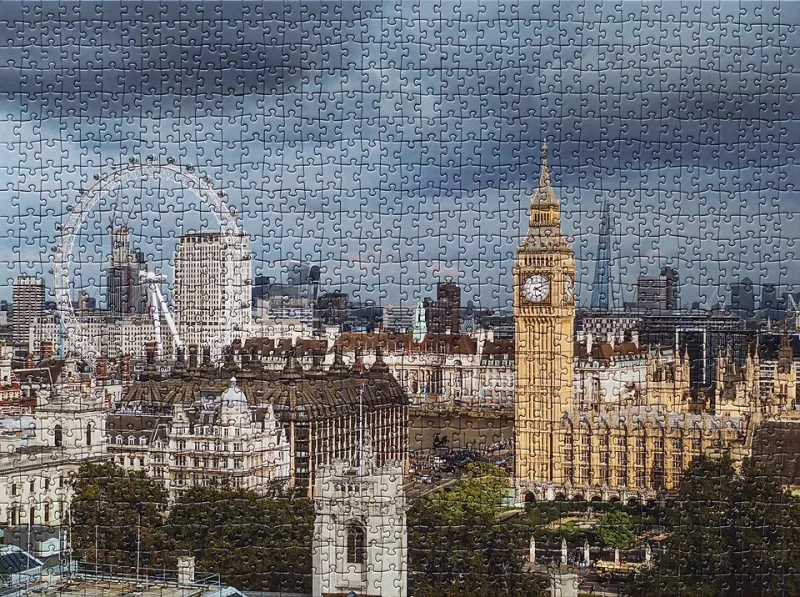
Photo by Photo by James Read on Unsplash on Unsplash
There is a particular kind of email that lands in your inbox every February. It is polite, it is three paragraphs long, and it is essentially a note from your council explaining that the price of living somewhere is going up again, while the number of things that make living somewhere pleasant is going down. Bins collected less often. Streetlights dimmed. A leisure centre quietly handed to a trust. A library reduced to a shelf in a community hall.
We have a word for a payment you make every month for a service that steadily degrades while the price climbs. In the private sector we would cancel the subscription and write a stern post on Trustpilot. In local government, the direct debit simply clears and we all get on with our day.
The 1991 time capsule at the heart of your bill
Start with the awkward structural fact that rarely makes it into the leaflet. Council tax bands in England are still pinned to property values as they stood on 1 April 1991. Not 2026. Not even this century. A street that has been gentrified beyond recognition sits in the same band as one that has spent thirty-five years in managed decline, because the assessor last looked at it when John Major was in Downing Street.
That single decision makes council tax the most regressive major levy we have. A cleaner in a small terraced house pays a far larger share of their income than a homeowner three streets away whose house is worth ten times as much and sits in band D. Everyone knows this. Nobody wants to reopen the revaluation question, because revaluation means somebody's neighbours getting a letter that says their house is now worth more, and thereby costing them more. So the time capsule stays shut and we carry on pretending the system is fair.
Mandated to spend, invited to beg
Here is the bit that genuinely gets under people's skin. Councils do not get to choose most of what they spend. Adult social care is a statutory duty. Children's services are a statutory duty. Homelessness support, waste collection, road maintenance, planning, licensing, safeguarding — all duties. What is discretionary is the stuff people actually notice: parks, libraries, youth clubs, arts funding, the small grants that keep a village hall alive.
So when the money tightens, councils do not cut the duties they will be legally hauled over the coals for failing. They cut the things that make a place feel like a place. And then, quite reasonably, residents look at their bill, look at the state of the high street, and conclude that the whole thing is a racket.
The squeeze heading into the 2026 financial year has sharpened all of this. Councils have spent years warning about the gap between what they are told to deliver and what they are given to deliver it with, and an increasing number have found themselves issuing those ominous section 114 notices — the local government equivalent of a company admitting it can no longer pay its way. Each one is treated as a scandal about a badly run town hall. Less often is it treated as what it usually is: a service that has been asked to grow like a national department while being funded like a parish council.
The blame machine works beautifully
What follows is the most reliable piece of political theatre in Britain. Central government points at councils and asks why the bins are late. Councils point at Westminster and ask where the money went. Voters, caught between the two, conclude that everyone is useless and nobody is responsible — which is, politically speaking, an extremely convenient outcome for the people holding the purse strings.
It is also why local elections so rarely turn on local government finance. The arguments are technical, the numbers are contested, and the headline is always the same: you will pay more and get less. Nobody campaigns on that. They campaign on potholes, and then discover that potholes are a budget line.
None of this is an argument for pretending councils are flawless. Procurement disasters happen. Reserves get spent on consultants. Senior pay packets in small authorities raise eyebrows. But the reflex to treat every funding crisis as a management failure is a way of avoiding the actual question, which is what we collectively expect local government to do, and who we expect to pay for it.
Let's argue about the right thing
Social care is the elephant in every council budget, and it is not really a local issue at all. It is a national risk being absorbed by the least equipped layer of government, funded by a property tax frozen in the early nineties, topped up by a precept that asks the same council taxpayer to solve a problem of national demographics. If we wanted to be honest, we would decide as a country whether care for older and disabled people is a national insurance-style entitlement, a means-tested local service, or a family responsibility with a state backstop. Each answer implies a different bill and a different payer.
Instead we have a fudge in which councils raise a bit more each year, cut a bit more each year, and produce a leaflet explaining that this is all very difficult. It is a subscription model for basic civilisation, and the service level agreement is written in fog.
The next time the bill arrives, it is worth resisting the urge to file it straight in the recycling. Read the line about what the increase is for. Ask your council what it is legally obliged to provide and what it is choosing to. Ask your MP why the funding formula works the way it does. Ask all of them, loudly, whether a tax based on 1991 house prices is a sensible way to pay for 2026's needs.
You are not being unreasonable for expecting the money to buy something. You are just living in a country that has spent three decades avoiding the conversation about what that something is.