The Excuse Forecast: Britain’s ‘Global Headwinds’ Only Ever Blow One Way
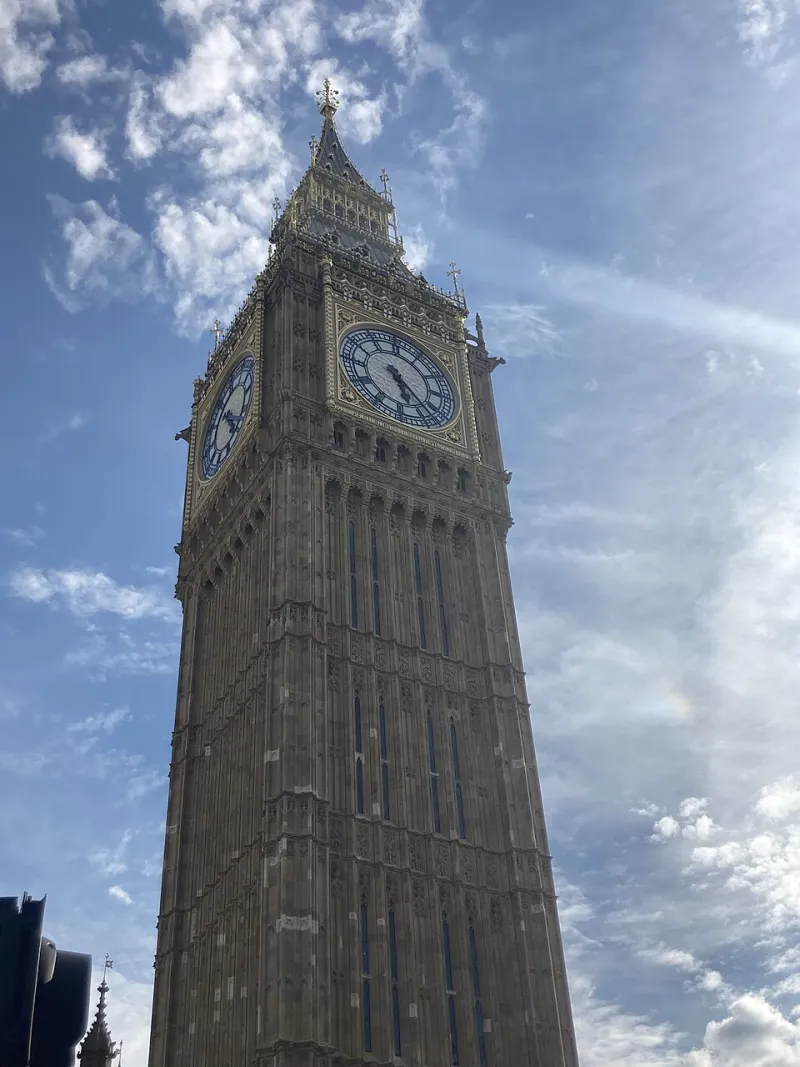
Photo: Mattsjc, CC BY-SA 4.0, via Wikimedia Commons
There is a phrase that does a lot of unpaid overtime in British politics: global headwinds. It turns up when growth numbers disappoint, when a manifesto pledge slips, when a public service starts making a noise like a washing machine with a brick in it. It sounds serious. It sounds external. It sounds like something no sensible person could argue with. That is precisely the problem.
A phrase with a passport
Global headwinds are not invented. The 2008 financial crisis was a genuine global shock. The pandemic was a genuine global shock. The energy price spike that followed Russia’s full-scale invasion of Ukraine in 2022 was a genuine global shock. Anyone who pretends otherwise is selling something.
But a phrase can be true in general and useless in particular. The question is not whether Britain is exposed to the world. Of course it is. The question is what ministers do with that exposure, and whether “global headwinds” is being used to explain a problem or to excuse a choice. Too often, it is the latter.
The tell is in the follow-up. When a minister blames global headwinds, ask which ones. Ask how much of the problem they explain. Ask what the UK can control and what it cannot. You will often get a metaphor where a number should be. Headwinds become a fog machine: useful for filling a room, useless for finding the exit.
The weather is real. The alibi is not.
There is a difference between weather and architecture. Weather is what happens to you. Architecture is what you build to cope with it. If global interest rates rise, that is weather. If the planning system cannot approve housing or grid connections at speed, that is architecture. If global energy prices spike, that is weather. If the country has spent years failing to insulate homes, build low-carbon generation and upgrade the grid, that is architecture.
Both matter. But only one is a domestic policy choice. And the “headwinds” framing tends to blur them into a single grey sky, as if Britain were a small boat with no rudder, no engine and no map, being blown about by forces beyond human control. It is a flattering image for governments. It is a less flattering one for voters.
Headwinds do not explain a planning queue
Consider the things that make Britain feel stuck: homes that are not built, factories waiting for a power connection, trains that stop short of where people need to go, skills shortages in sectors that keep saying they are desperate for staff. Global conditions affect all of these. Global conditions do not explain all of them.
A company waiting years for a grid connection is not experiencing a headwind. It is experiencing a queue. A young family priced out of their hometown is not experiencing a headwind. They are experiencing a housing supply system that has been slowly compacted by planning rules, land values and political cowardice. A hospital trust short of radiographers is not experiencing a headwind. It is experiencing a training and retention problem that has been visible for years.
You can blame the sky for the rain. You cannot blame the sky for the fact that the roof has been missing since 2010.
The alibi economy
The political incentive is obvious. Admitting a domestic failure costs credibility. Blaming an external force costs nothing in the short term, especially if the external force is real. Every government since the financial crisis has reached for some version of this move. It is not unique to one party. It is a governing habit, and habits are hard to break.
But there is a cost. If everything is someone else’s fault, voters start to wonder whether anyone is actually steering. Investors hear the same thing and ask a blunter question: if the government cannot identify what it controls, why should anyone believe it can fix what it controls? “Global headwinds” can become a self-fulfilling story. If the weather explains everything, then no reform is urgent, no minister is responsible and no promise really has to be kept.
That is not just bad politics. It is bad government. A country cannot prioritise what it refuses to name.
What a reckoning would look like
No one is asking ministers to ban the phrase. Global shocks are real, and pretending otherwise would be its own kind of nonsense. What is needed is a bit more honesty about the transmission mechanism. When a policy slips, say which external factor is doing what. When a target is missed, separate the global from the domestic. When a service is failing, admit which failures are homegrown.
A useful test for any minister: can you finish the sentence “Global headwinds explain X, but we are responsible for Y”? If not, the phrase is not analysis. It is an alibi.
Britain does not need a government that pretends the world is calm. It needs one that can say: some of this is weather, some of this is us. The second part is where the argument should start. The first part is where it usually stops.
Global headwinds are real. But they do not blow in only one direction. They blow wherever a government has left the windows open and called it strategy.