The Wheelie Bin Referendum: Why Rubbish Is the Sharpest Test of Local Government
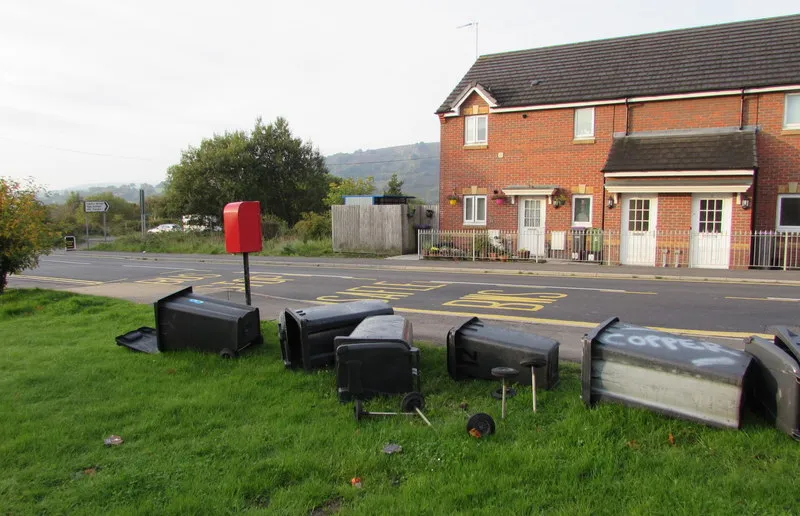
Photo: Jaggery , CC BY-SA 2.0, via Wikimedia Commons
Bin day is the most honest political broadcast in Britain. No spin, no focus group, no fiscal headroom. Either the truck turns up or it doesn’t. In 2026, as Simpler Recycling changes what households in England put in which container, that weekly ritual is becoming a sharper test of state capacity than any white paper.
The daily referendum
Most of government is invisible. You do not see the benefit system until it fails. You do not see the NHS until you need it. But the bin is different. It sits outside your house. It is collected on a schedule. It is the one public service that every household interacts with, every week, whether they want to or not.
That makes waste unusually political. A missed collection is not an abstraction. It is a smell. It is a fox on the pavement. It is a neighbour’s complaint. When councils switch to fortnightly residual collections, or change the rules on what goes in which bin, they are not just tweaking logistics. They are asking residents to change their behaviour and trust that the system will hold.
Simpler Recycling, harder reality
The new Simpler Recycling rules are meant to make things, well, simpler. From 2026, households in England are expected to separate food waste and dry recyclables in a more consistent way. The aim is noble: less waste, better recycling, less confusion. But the implementation is where the state meets the street.
New rules mean new containers, new rounds and new contracts. Councils have to communicate with millions of households. They have to retrofit depots and renegotiate with contractors. They have to persuade people that another bin is not just another chore. And they have to do it while budgets are tight and public patience is thinner than a bin liner.
Contracts, blame and fly-tipping
Waste is a contract-heavy business. Councils hire private companies to collect. Those contracts can be complex, long and hard to exit. When collections go wrong, the blame game starts: the council blames the contractor, the contractor blames the council, and residents blame everyone.
That blurring of accountability is a problem. Local government works best when residents know who to hold to account. If the bin is missed, you should know whether it is a depot issue, a route issue or a contract issue — and you should know who is responsible for fixing it. Too often, the answer is a call centre and a vague promise.
Meanwhile, fly-tipping is the ugly symptom of a system that feels unreliable. If people believe the collection service is broken, or that the tip is hard to use, some will dump their rubbish instead. That is not just an anti-social act. It is a signal that the state’s most visible service is failing at the first hurdle.
The state is a lorry with a crew
We talk about ‘state capacity’ as if it were a theory. It is not. It is a lorry with a crew, a depot with a rota, a council with a phone line that works. The bin is the front door of the state — not because it is glamorous, but because it is unavoidable.
That is why bin politics should not be treated as a joke. When a council gets waste right, it builds trust. When it gets it wrong, it corrodes trust in everything else. People do not separate their recyclables because they have read the strategy document. They do it because the system is easy, reliable and fair.
Local accountability matters here more than another glossy strategy. Councils need the funding to run good services, but they also need to be transparent about performance. Residents need clear information, not another leaflet with a picture of a yoghurt pot. And contractors need to be held to standards that are visible to the people paying for them.
Beyond the bin
The bin is a small thing. It is also a test. Can the state do the simple things well? Can it explain change without losing people? Can it fix problems before they become fly-tipping? In 2026, those questions are not abstract. They are sitting outside your house, waiting to be collected.
So next time bin day comes around, treat it as a mini-referendum. Not on a party, but on competence. The truck turning up is not just a service. It is a small, weekly sign that the machinery of government is still working. When it stops, the smell is the least of our problems.